If you are eyeing a spec build in the Bird Streets, you already know this enclave rewards the right vision. The views, privacy, and buyer pool can deliver standout returns when the product fits the market. At the same time, hillside construction, permitting, and timing can stretch budgets if you miss key details. In this guide, you will learn how to target the right lots, design what sells, map timelines, and plan exits that protect ROI in Hollywood Hills West’s Bird Streets. Let’s dive in.
Why the Bird Streets
The Bird Streets sit north of Sunset Boulevard between Doheny and Laurel Canyon. The area is known for panoramic city and ocean views, privacy, and a high-net-worth buyer base that values turnkey, design-forward homes. Demand centers on modern architecture, indoor-outdoor living, and smart systems. Sales volume can swing with broader luxury cycles, so you should model sensitivity to price, interest rates, and product fit. Before you set a budget, run a 12 to 24-month comp analysis using Bird Streets or immediate ridgeline blocks only.
What to buy: target lots
Not every parcel pencils the same way. Here is what to prioritize:
- Buildable area: Aim for lots that support 3,000 to 6,000+ buildable square feet after accounting for slopes. Smaller footprints near 2,000 to 3,000 square feet can work if views and finishes are exceptional.
- Topography: Gentle to moderate slopes with elevated ridgelines reduce foundation costs and unlock stronger views. Very steep lots typically require more cut and fill and engineered retaining walls, which lift budgets and risk.
- Orientation and views: West or southwest views toward the city and ocean command premiums. Verify view easements, protected trees, and neighboring development potential that could impact sightlines.
- Access and parking: Flat street access and room for staging keep hauling and logistics manageable. Plan for a minimum 2-car garage plus driveway. A gated entry increases appeal for privacy-focused buyers.
- Utilities: Confirm sewer lateral location and length. Check power availability and transformer capacity for EV charging, pools, and high-efficiency HVAC. Long utility runs and upgrades add time and cost.
- Entitlements and code: Most parcels fall under single-family zoning and hillside regulations. Validate setbacks, height, FAR, lot coverage, open space, and any overlays. Early due diligence here prevents redesigns later.
- Soils and geotech: Commission geotechnical studies early. Slope stability, bearing capacity, and retaining-wall design can materially change your pro forma.
Design that sells
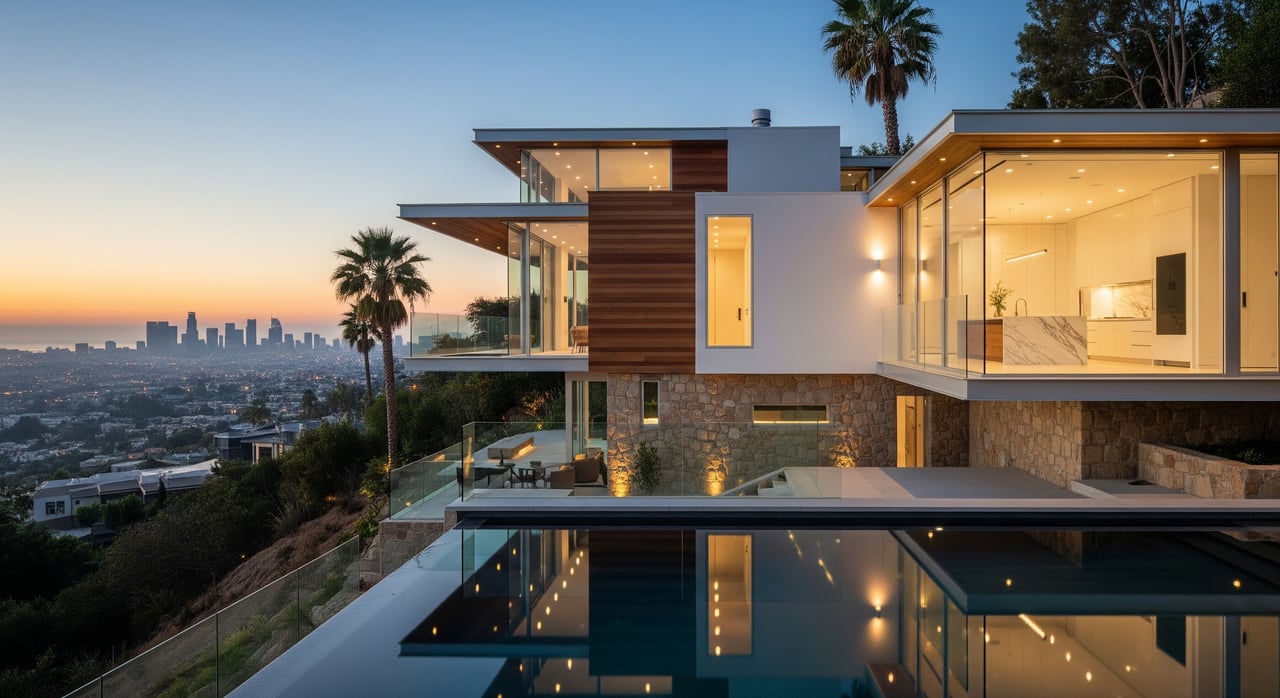
Contemporary modern architecture is the dominant language in the Bird Streets. Buyers expect clean lines, expansive glazing, and effortless indoor-outdoor flow paired with privacy and warmth.
Core program
- View-first planning: Orient living spaces and the primary suite to the best views with minimal mullions and large terraces.
- Open plan: Create clear sightlines from the kitchen to outdoor entertaining.
- Indoor-outdoor integration: Use large sliders or folding doors, covered lounges, outdoor kitchens, and an infinity or negative-edge pool.
- Primary suite: Treat it as a suite of rooms with a private terrace, spa bath, and generous closet systems.
- Dedicated spaces: Include a home office or den, gym, media room, and an elevator in multi-level plans over 3,000 square feet.
- Guest flexibility: Provide a guest or in-law suite and consider an ADU or staff space where feasible.
- Ceiling height and daylighting: Target 9 to 12-foot ceilings with clerestory glazing to balance light and privacy.
Systems and finishes
- Kitchens and tech: Chef-grade appliances, large islands, smart-home controls, and whole-house audio are expected.
- Sustainability: Plan for EV chargers, efficient HVAC, LED lighting, solar readiness or panels, water-efficient fixtures, and drought-tolerant landscaping.
- Exterior materials: Favor stone, stucco, composite panels, and metal accents that age well on hillsides.
Resale-proofing
- Keep the palette modern but warm with wood accents and human-scale details. Avoid ultra-specific themes that narrow your buyer pool. Design rooms that can convert between office and bedroom to widen appeal.
Permits and timeline
Permitting and construction move on hillside time. Build your schedule around these ranges:
- Design and plan check: 6 to 12 months for straightforward single-family permits without variances.
- Discretionary approvals: Add 6 to 18 months if you need variances, hillside review, or public hearings.
- Construction: 12 to 24 months depending on complexity, foundation work, and site access.
- Total runway: Plan 18 to 36 months from acquisition to a move-in-ready listing for a typical Bird Streets spec.
Key checkpoints include LADBS plan check, City Planning zoning review, hillside development permits, geotechnical approvals, grading and erosion control, LADWP service upgrades, and any tree protection requirements. If you are modeling a rental exit, review short-term rental rules early, as they are tightly regulated.
Budget and ROI basics
Hillside luxury comes with higher hard and soft costs than flatland builds. Excavation, retaining walls, specialized foundations, finishes, and professional fees drive the premium. Obtain current estimates from local general contractors with Bird Streets experience and price your target product against nearby comps and replacement cost.
Model holding costs for a longer marketing window. Luxury absorption can take time, and carrying interest, taxes, insurance, and staging should be baked into your pro forma. ROI correlates strongly with view quality, privacy, and turnkey execution. The closer you deliver to the buyer’s dream list, the stronger your price per foot.
Exit strategies
Protect your downside by planning multiple exits:
- Sell finished spec: Highest potential price with moderate-to-high market exposure risk. Requires maximum capital and timeline.
- Pre-sale during construction: Reduces market risk and may allow buyer customization. Requires strong marketing and relationships.
- Sell near-complete to a developer or institutional buyer: Faster liquidity at a slightly lower cap can be useful in softening markets.
- Hold and lease long-term: Produces recurring income, but expect lower immediate returns. Short-term rental strategies are constrained by city regulation.
- Entitled lot flip: Add value through design and permits, then sell before construction. Reduces build risk but adds entitlement timing risk.
Marketing that moves buyers
In the Bird Streets, presentation is part of the product. Use a listing team with proven ultra-luxury reach and a network that touches entertainment, tech, and international buyers. Invest in aerials, twilight photography, virtual tours, and a detailed finishes specification. Plan private previews for top brokers and stage interiors fully to elevate perceived value.
Risks and mitigations
Every hillside build carries known variables. Set contingencies and stay ahead of the curve.
- View risk: Verify easements and evaluate neighbors’ buildability. Study tree protections and growth patterns.
- Geotechnical surprises: Order conservative early geotechnical work. Budget contingencies of 10 to 20 percent for hillside conditions.
- Entitlement delays: Hire consultants who know LA hearings and hillside policy. Do early outreach and align with local guidelines to reduce friction.
- Market timing: Luxury demand can be rate and headline sensitive. Keep flexible exits and conservative assumptions.
- Utilities and logistics: Narrow roads and crane access can add time and cost. Create a site logistics plan with haul routes, staging plans, and utility coordination timelines.
Action checklist
Use this quick reference before you write an offer or finalize plans.
- Pre-acquisition: Title report, preliminary topography, and zoning. Early geotechnical and architectural massing to test FAR, height, and setbacks. Confirm sewer, power, and road access.
- Budgeting: Get GC ranges that include hillside premiums for grading, retaining walls, and foundations. Add 10 to 20 percent contingency and 6 to 12 months of interest and marketing.
- Team assembly: Architect and GC with Bird Streets experience, plus geotechnical, structural, civil, landscape, and a luxury broker with local sales history.
- Permits and community: Meet with Planning early. Identify discretionary needs and plan outreach if required.
- Sales and marketing: Engage your broker early. Prepare renderings and virtual staging for pre-completion marketing. Schedule private broker previews.
Work with The Kumar Group
If you are evaluating a Bird Streets acquisition or planning a reposition, you will benefit from a design-aware, local process and a sales strategy built for ultra-luxury. The Kumar Group pairs founder-led, discreet advisory with The Agency’s marketing and international reach to help you buy right, design to the demand, and exit with confidence. Let’s Connect to pressure-test your pro forma, refine the product brief, and map the right timeline for your goals.
FAQs
What makes Bird Streets lots attractive for ROI?
- Parcels that support 3,000 to 6,000+ buildable square feet with west or southwest views, moderate slopes, and good access typically offer the best mix of marketability and construction feasibility.
How long do Bird Streets permits and construction take?
- Expect 6 to 12 months for design and plan check on ministerial projects, plus 12 to 24 months for construction. Add 6 to 18 months if variances or discretionary approvals are required.
Which design features command premiums in the Bird Streets?
- View-first floor plans, expansive glazing, seamless indoor-outdoor living, an infinity-edge pool, a best-in-class primary suite, smart-home integration, and sustainability features.
What contingencies should I carry for a hillside spec?
- Include a 10 to 20 percent budget contingency for hillside and geotechnical variables, plus time contingencies of roughly 8 to 20 weeks for permitting and logistics.
What exit options reduce my market risk?
- Consider a pre-sale during construction, a near-complete sale to a developer, or an entitled lot flip. Each can shorten exposure compared with a full spec build sale.
Are short-term rentals a viable exit in the Bird Streets?
- Short-term rentals are tightly regulated in Los Angeles. If you plan to lease, model a long-term rental strategy and confirm local rules early in the process.