Two homes a block apart in Hollywood Hills West can look similar on paper yet sell for dramatically different prices. The reason is often the view. If you are weighing a purchase, prepping a listing, or evaluating an investment, understanding how view premiums work can help you price confidently and avoid costly surprises. In this guide, you will learn which views command the strongest premiums, how professionals measure them, and what local factors in the Hills can change the math. Let’s dive in.
What buyers value in a view
Not all views are equal. In Hollywood Hills West, buyers often sort view quality into categories that align with demand and pricing.
- Panoramic ocean views. The gold standard when unobstructed and wide. Prestige, sunsets, and rarity make this the most prized category.
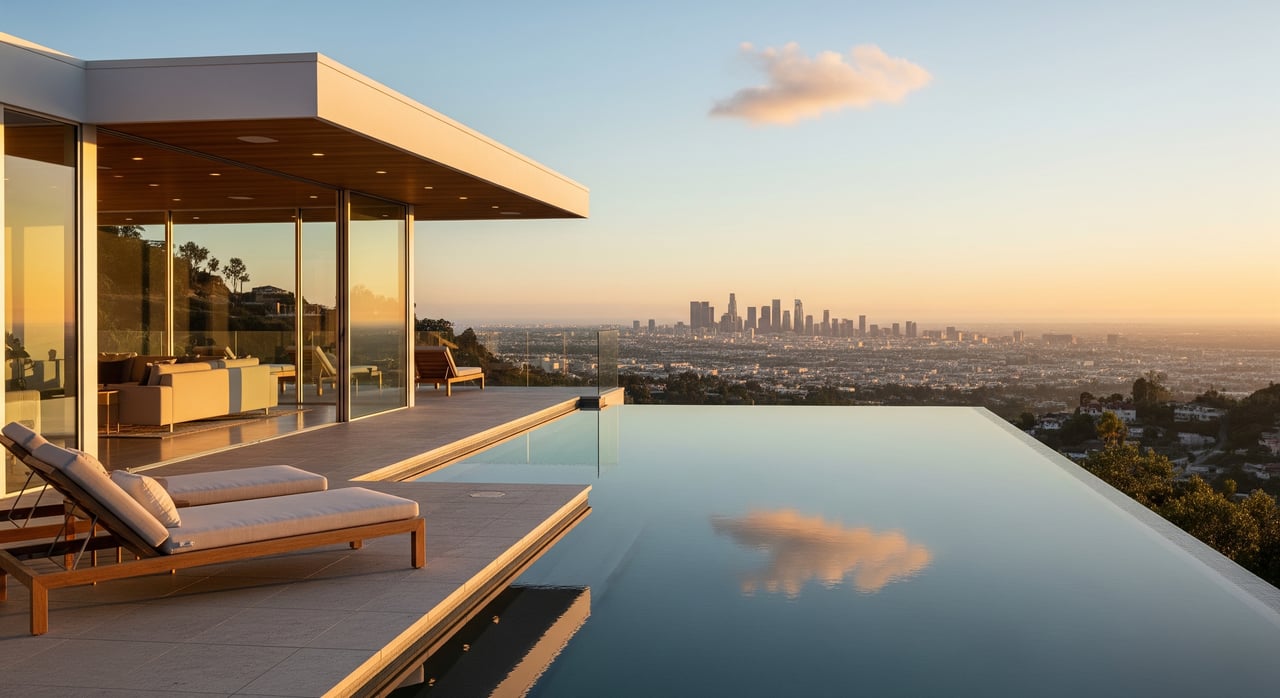
- Downtown skyline and city lights. Dramatic at night and year-round. Many buyers prize evening panoramas across Los Angeles.
- Iconic landmarks. The Hollywood Sign or Griffith Observatory sightlines can add cachet for certain buyers.
- Canyon and green hillside. Lush, private, and calming. Often favored by buyers who value nature and quieter outlooks.
- Partial or framed views. Glimpses between homes or through trees still carry value, though less than sweeping vistas.
- No view or obstructed. Baseline for comparison, often trading at a discount relative to true view homes.
What separates a standout view from a good one:
- Scope and breadth, from narrow corridors to wraparound panoramas.
- Distance and focal point, such as ocean horizons or city skylines.
- Permanence, including the risk of future blockage by growth or development.
- Day and night appeal, since city lights and sunsets can matter as much as daytime depth.
- Orientation, where south and west exposures often capture sunsets and ocean conditions.
- Elevation, which can expand sightlines and improve privacy.
How much views add to price
There is no single percentage that fits every home. In Los Angeles luxury and upper‑mid markets, brokers often use rules of thumb when comparing similar homes.
- Minor or partial views often support small positive adjustments, commonly in the 3 to 8 percent range.
- Good city or canyon views and partial ocean glimpses can justify moderate adjustments, often 8 to 20 percent.
- Panoramic ocean, skyline, landmark, or unobstructed sweeping views can support larger adjustments, often 20 to 40 percent or more when truly exceptional.
Treat these as starting points rather than fixed rules. Actual premiums depend on the exact view, the home’s design and condition, competing inventory, and macro conditions. The most reliable way to price is to compare paired sales nearby and update your analysis with current market data.
How professionals measure a view premium
Appraisers and seasoned agents lean on a few proven methods:
- Paired-sales analysis. Match two closely comparable homes where the primary difference is the view to isolate a premium.
- CMA adjustments. Apply percentage or dollar adjustments across comps based on relative view quality, then pressure test the result with recent sales.
- Hedonic studies. Statistical models from academic and industry sources that estimate the contribution of view attributes across many transactions.
For listings and appraisals, documentation matters. Use photos from key rooms and terraces at different times of day, include maps that show sightlines and elevations, and flag potential for future blocking.
Local factors that move the needle
Hollywood Hills West sits on the southern slopes of the Santa Monica Mountains above Hollywood and West Hollywood. Micro-topography makes view quality highly variable, even on the same street.
- Orientation. South and west exposures often catch ocean haze, sunsets, and the evening city glow. North-facing lots can take in valley views and cooler light.
- Elevation. Higher lots often command broader horizons and better privacy, with ridge and crest locations near Mulholland or along canyon rims capturing some of the widest vistas.
- Micro-views. Winding roads and varied siting mean two houses a few doors apart can have entirely different sightlines.
- Privacy and exposure. Panoramic lots can be more exposed to wind or neighboring sightlines, which some buyers accept for the view and others do not.
Permanence, permits, and view protection
View protection is not automatic in Los Angeles. Many aspects are private matters handled through easements or covenants.
- Verify zoning, height limits, and buildable envelopes for nearby parcels through Los Angeles City Planning and LADBS permit records.
- Confirm permit histories and any pending applications on adjacent lots.
- Consider whether tree growth could block a view over time. Removal or pruning may require permits or be restricted by local rules, so check before you plan work.
When a view is critical to value, assemble a small file for buyers or appraisers that includes planning maps, permit lookups, and any private view agreements.
Wildfire, insurance, and total cost of ownership
Much of the Hills lies in higher wildfire risk zones. That does not reduce the beauty of a view, but it can affect insurance terms and carrying costs.
- Review hazard designations using Cal Fire’s resources.
- Consult the California Department of Insurance for guidance on coverage in higher-risk areas.
- Plan early for quotes from carriers with hillside experience. Some properties may require the California FAIR Plan or layered policies.
- Budget for fire-hardening steps such as defensible space, ember-resistant vents, and landscape adjustments, which can influence the overall value equation.
Insurance costs and availability can shape buyer demand, which in turn can influence how much premium a view commands in a given moment.
Access, parking, and livability tradeoffs
Elevated lots sometimes come with steep driveways, tight roads, or limited guest parking. Those practical realities can offset some of a view’s appeal for certain buyers. Balance the daily living experience against the visual payoff. Also consider solar exposure in west-facing rooms and wind conditions on exposed terraces.
Action plans by role
For sellers with a view
- Document the vista. Capture high-quality photos by day and night, plus drone panoramas if appropriate. Show the view from living areas and the primary suite.
- Prove permanence. Include zoning and building envelopes from City Planning, permit histories from LADBS, and any view easements.
- Maximize presentation. Trim vegetation where allowed, use low-profile railings, and stage to frame the view from key sightlines inside.
- Price with evidence. Present paired comps and articulate why your view is superior in scope, orientation, and night appeal.
For buyers evaluating a view home
- Verify the future. Check neighboring parcel potential and permit histories. Look for practical protections such as easements.
- Inspect the hillside. Evaluate retaining walls, drainage, slope stability, and access. Factor any remediation costs into your offer.
- Model the sun and wind. Visit at different times of day and night to understand comfort and glare.
- Underwrite insurance. Start quotes early using Cal Fire maps and Department of Insurance guidance to anticipate premiums.
For investors
- Quantify rental lift. Views can support higher nightly rates for luxury short-term rentals and higher rents for select long-term product. Review Los Angeles rules for short-term use and enforcement before assuming income.
- Test downside. In thinner buyer pools, premium features can be less liquid. Stress test cap rates and exit values.
- Plan for maintenance. Terraces, decks, and support structures on slopes need ongoing attention in budgets and reserves.
Negotiation and appraisal tips
- Build a narrative. Use side-by-side photos, maps, and paired sales to demonstrate the incremental value of your view.
- Match the comp to the view. If few true comps exist, explain the differences in scope and permanence and support the gap with independent evidence like elevation profiles and drone imagery.
- Label precisely. In MLS fields, use clear descriptors that reflect real sightlines, such as panoramic city lights with ocean peek, rather than generic terms.
Data sources worth tapping
For a deeper read on a specific property, use public resources alongside MLS data.
- Los Angeles County Assessor for parcel maps, elevations, and lot dimensions.
- Los Angeles City Planning for hillside standards, zoning, and mapping tools.
- LADBS for permit histories, grading constraints, and inspection records.
- Cal Fire and the California Department of Insurance for wildfire risk and insurance context.
What it means for today’s market
In the Hollywood Hills West luxury and upper‑mid tiers, view homes have shown resilient demand compared to non-view peers, with premiums that expand or contract based on broader economic conditions. Supply is naturally limited in hillside zones, which supports strong pricing for exceptional vistas. The key is to price and negotiate with evidence rather than averages. If you can document a wide, permanent view and present it clearly, you position the property to earn its premium.
If you want a precise read on a specific street or lot, we can build a paired-sales case and a photo-driven narrative that stands up to scrutiny.
Ready to talk strategy for your view home in Hollywood Hills West? Connect with The Kumar Group for a tailored pricing analysis and marketing plan.
FAQs
How do view premiums affect prices in Hollywood Hills West?
- Premiums vary by scope and type. Minor views can add single-digit percentages, while panoramic ocean or skyline vistas may support much larger adjustments when paired sales confirm it.
What steps confirm a view’s permanence before I buy?
- Check neighboring zoning and buildable envelopes through City Planning, review LADBS permits on adjacent parcels, and look for private easements that limit tree growth or building heights.
Do I need permits to trim trees blocking a view?
- Possibly. Vegetation removal or pruning can be regulated. Always verify requirements through LADBS and City rules before you plan any work.
How do wildfire zones influence insurability and price?
- Higher-risk designations can raise premiums or narrow carrier options, which affects total ownership cost and demand. Consult Cal Fire resources and the Department of Insurance early.
What is the best way to market a view home?
- Lead with visuals that prove scope by day and night, support permanence with planning and permit documents, and position the view from primary living areas in photos, floor plans, and copy.