Are you drawn to the romance of arches and tile roofs, or do you picture clean lines, glass walls, and open entertaining space? In Beverly Hills, that choice is especially meaningful because the city has deep roots in classic period-revival architecture while also holding an important place in modern design. If you are buying, selling, or simply refining your taste, understanding how these homes differ can help you read the market more clearly. Let’s dive in.
Why Beverly Hills Makes This Comparison Unique
Beverly Hills is one of the best places to compare classic and contemporary homes because much of its major residential growth happened in the 1920s. According to the city’s historic survey, that era brought a strong wave of period-revival styles, including Spanish Colonial Revival, Tudor, Georgian, Colonial, and Mediterranean homes.
Over time, newer design movements added another layer to the local housing stock. Later decades introduced Hollywood Regency and modernist work, creating a market where traditional and contemporary homes often sit within the same broader luxury landscape.
That mix matters if you are searching in Beverly Hills today. Style is not just about appearance here. It often affects how a home lives, how it is presented, and how buyers respond to it.
What Defines A Classic Beverly Hills Home
In Beverly Hills, “classic” usually points to the architectural language that shaped the city’s early residential identity. These homes often emphasize craftsmanship, symmetry or ornament, and a stronger sense of arrival.
The city’s historic survey and single-family style guide highlight several foundational styles. Among the most recognizable are Spanish Colonial Revival, Mediterranean-influenced homes, and Georgian or Federal Revival residences.
Spanish And Mediterranean Features
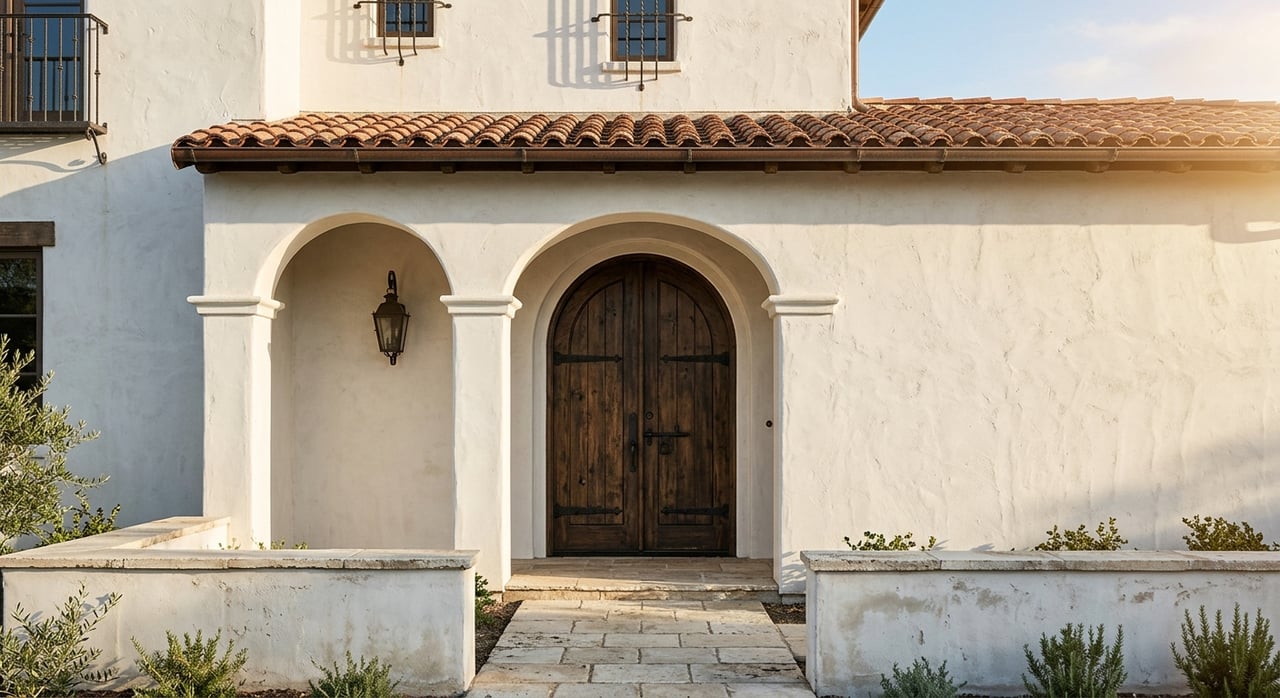
Spanish Colonial Revival homes are defined in the city survey by low-pitched red tile roofs, little or no eave overhang, parapets, arches over entries and windows, and ironwork at windows, doors, balconies, and roof supports. Related styles in the city guide add stucco surfaces, balconettes, barrel tile roofs, and Mediterranean or subtropical planting.
In real life, these details often create a home that feels layered and tactile. Arrival may happen through a gate, courtyard, porch, or loggia, and entertaining can move between interior rooms and shaded outdoor areas. That pattern is an informed reading of the architecture rather than a strict rule.
These homes often feel rooted in Beverly Hills’ older estate tradition. If you value warmth, texture, and a sense of heritage, this category may feel especially compelling.
Georgian And Federal Revival Features
The city’s style guide describes Georgian and Federal Revival homes as stately two-story compositions. Common elements include a distinct primary gable or flat façade, classical door cases, broken pediments, porticos or pavilions, and balanced placement of windows and doors.
This architecture usually reads as more formal and sequence-driven than a contemporary home. The front elevation has presence, the entry axis matters, and the interior often feels more room-based than loft-like. That interpretation follows directly from the city’s design descriptions.
For many buyers, the appeal is order, privacy, and a legacy-estate atmosphere. These homes can project quiet confidence rather than visual minimalism.
What Defines A Contemporary Beverly Hills Home
Beverly Hills also has a well-established contemporary side. The city’s single-family style guide treats Contemporary as a formal residential category and includes styles such as Moderne, International Style, and Post Modern Style.
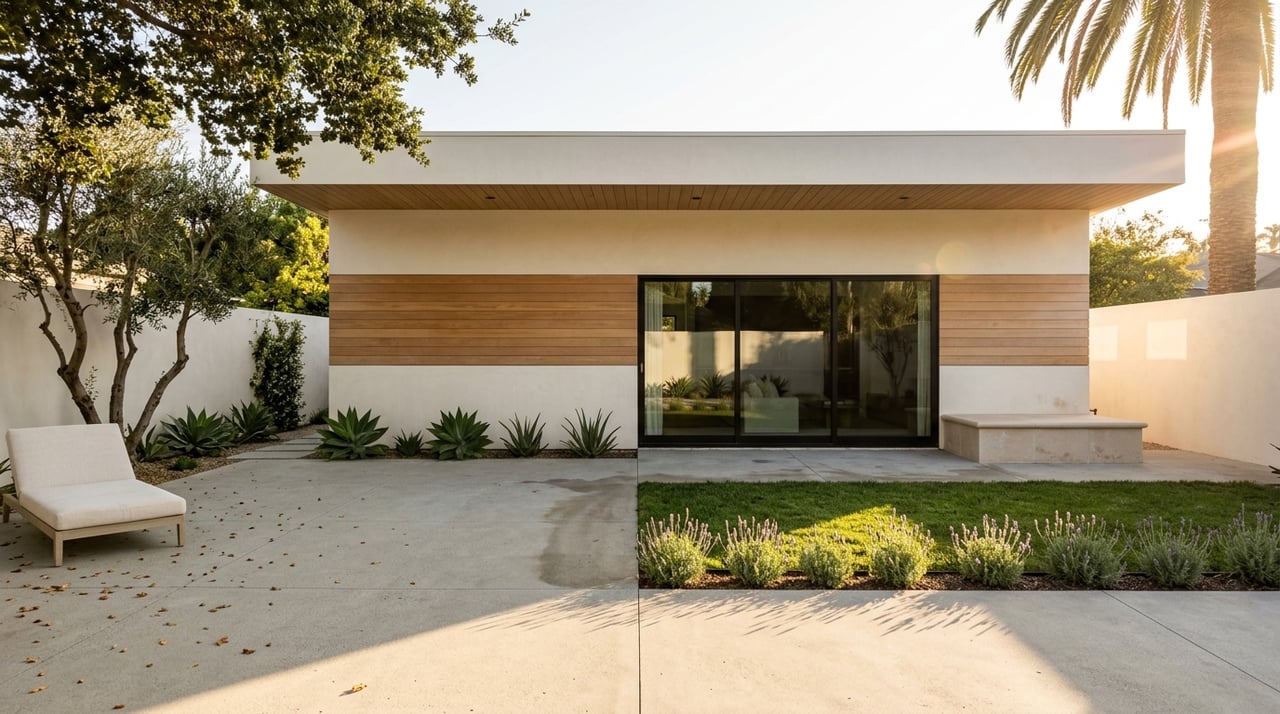
The style guide describes Moderne homes as featuring rectangular window walls, horizontal volumes, asymmetrical compositions, rounded corners, little or no ornamentation, metal window frames and railings, glass block, and contemporary materials. In simple terms, these homes often prioritize shape, light, and flow over ornament and historical detailing.
The city’s historic survey notes that modernism became a visible force in Beverly Hills after World War II. While it showed up strongly in multiple-unit and commercial construction, new homes also continued to appear in the hills and on redeveloped parcels.
Contemporary Living Experience
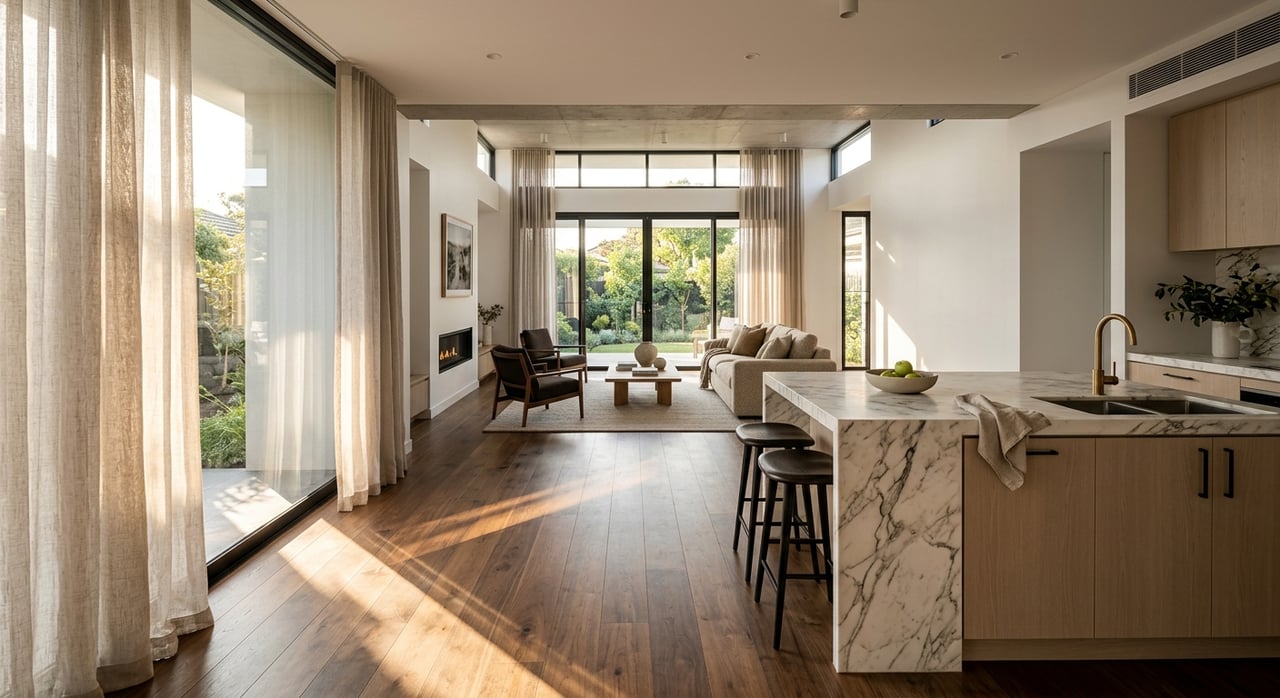
Contemporary homes usually support a different daily rhythm. Based on the architectural definitions in the city guide, they often emphasize long sightlines, brighter interiors, open entertaining zones, and easier indoor-outdoor movement.
That can make them feel especially appealing if you want a more flexible layout. Rather than moving room to room through a formal sequence, you may experience the home as one connected environment with fewer visual interruptions.
This is one reason contemporary homes often feel turnkey to style-conscious buyers. The design language is simpler, more edited, and often easier to pair with modern furnishings and current lifestyles.
How Hollywood Regency Bridges Both Worlds
Not every Beverly Hills home fits neatly into a classic or contemporary box. One of the city’s most useful bridge categories is Hollywood Regency.
The historic survey describes Hollywood Regency as a blend of Moderne sleekness and early-19th-century elegance. That helps explain why some Beverly Hills homes feel traditional from the street but more contemporary once you step inside.
If you are drawn to both glamour and restraint, this middle ground may be worth watching closely. It often offers the polish of classic design with some of the openness or simplicity associated with later modern homes.
How Style Changes Daily Living
Architectural style shapes more than curb appeal. It can influence how you entertain, how private a home feels, and how spaces connect throughout the day.
Classic homes in Beverly Hills often create more defined moments. You may have a formal entry, separate entertaining rooms, and outdoor spaces that feel enclosed and sheltered. That can appeal to buyers who enjoy a stronger sense of structure and ceremony.
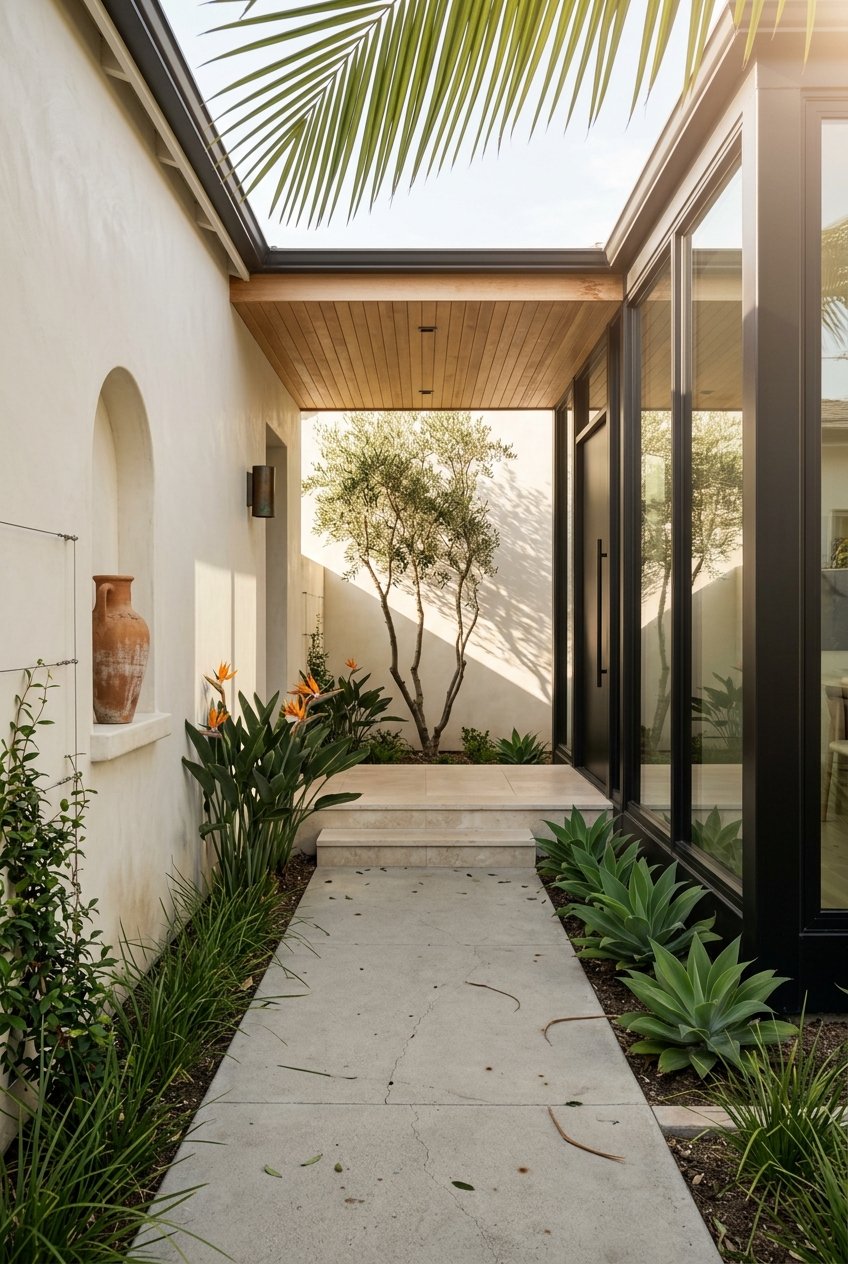
Contemporary homes often create the opposite effect. Open plan areas, larger expanses of glass, and direct connections to terraces or pool decks can make the home feel more fluid and visually expansive.
Neither approach is better across the board. The right fit depends on how you live, what kind of atmosphere you want, and how much you value architectural character versus spatial flexibility.
How Style Affects Beverly Hills Marketing
In Beverly Hills, homes are sold visually as much as spatially. That matters whether you are preparing to list or trying to evaluate why certain properties capture attention faster online.
The city’s architectural definitions suggest that classic homes often photograph best when media highlights rooflines, arches, ironwork, symmetry, central entries, lawns, courtyard approaches, and garden settings. These homes tend to read as textured, shaded, and materially rich.
Contemporary homes usually benefit from imagery that emphasizes volume, glass, view corridors, pool decks, and night lighting. Their appeal often comes through clarity, openness, and the relationship between indoor and outdoor space.
That visual difference matters because online presentation plays a major role in how buyers shop. Zillow’s 2025 buyer research found that 68% of prospective buyers viewed homes online and ranked floor plans and high-resolution photos as the top two listing features. NAR’s 2025 staging report also found that photos, staging, videos, and virtual tours are important to buyers.
Why Style Matters In Today’s Market
Beverly Hills sits firmly in the luxury segment, but the numbers vary depending on the source and methodology. As of 2026, Zillow reported a typical home value of $3,666,259 and a median list price of $2,506,000, Realtor.com reported a median listing price of $5.8 million, and Redfin reported a median sale price of $6.1 million over the three months ending May 2026.
That spread tells you something important. Beverly Hills is highly sensitive to differences in style, lot, view, renovation level, and micro-neighborhood.
Zillow’s neighborhood value data shows that contrast clearly. Beverly Hills Gateway was around $11.2 million and The Flats around $10.3 million, while Tri-West was about $1.2 million.
In other words, style does not exist in a vacuum. In Beverly Hills, it works together with location, presentation, and condition to shape how a home is perceived and priced.
Choosing Between Classic And Contemporary
If you are deciding between the two, start with how you want the home to feel rather than what looks best in a photo. Classic homes often offer history, formality, and architectural detail that feel deeply tied to Beverly Hills’ early identity.
Contemporary homes often offer openness, design clarity, and a lifestyle built around light and flow. For some buyers, that means easier everyday living and a cleaner visual backdrop.
A smart search usually comes down to a few practical questions:
- Do you prefer formal rooms or open gathering space?
- Do you want architectural ornament or minimal detailing?
- Is your priority heritage character or turnkey simplicity?
- Do you care more about a strong street presence or indoor-outdoor flow?
- Are you open to a hybrid style like Hollywood Regency?
For sellers, the question is slightly different. You want to understand what your home already does well, then present it in a way that matches its architectural story rather than forcing it into the wrong aesthetic.
The Beverly Hills Advantage Of Knowing The Difference
In a design-conscious market like Beverly Hills, buyers and sellers benefit from seeing past labels. A home is not just “traditional” or “modern.” It is a combination of architecture, layout, presentation, and setting within one of Los Angeles’ most style-aware luxury markets.
When you understand those distinctions, you can search with more confidence, price with more precision, and market with more intention. That is especially valuable in a city where visual identity and neighborhood context can strongly shape demand.
If you are considering a move in Beverly Hills and want a more tailored read on how a specific home or architectural style fits the market, The Kumar Group offers the design-aware, high-touch guidance that luxury clients value.
FAQs
What are classic home styles in Beverly Hills?
- In Beverly Hills, classic homes often include Spanish Colonial Revival, Mediterranean, Georgian, Federal Revival, Tudor, and other period-revival styles that were prominent during the city’s major residential growth in the 1920s.
What defines a contemporary home in Beverly Hills?
- Beverly Hills classifies Contemporary as a formal residential category that includes styles such as Moderne, International Style, and Post Modern Style, often marked by cleaner lines, asymmetrical forms, larger window areas, and minimal ornament.
How do classic and contemporary Beverly Hills homes live differently?
- Classic homes often feel more formal and room-based, while contemporary homes usually emphasize open entertaining areas, long sightlines, natural light, and easier indoor-outdoor flow.
Why does architectural style matter in the Beverly Hills market?
- Architectural style can affect how a home shows online, how buyers interpret value, and how the property fits within Beverly Hills’ design-conscious luxury market, where style, location, lot, and renovation level can all shift pricing materially.
What is Hollywood Regency in Beverly Hills architecture?
- Hollywood Regency is a style the city’s historic survey describes as blending Moderne sleekness with early-19th-century elegance, making it a useful reference point for homes that feel both classic and current.
How should Beverly Hills sellers market classic versus contemporary homes?
- Classic homes often benefit from media that highlights texture, symmetry, gardens, and architectural details, while contemporary homes usually perform best when photography emphasizes volume, glass, views, pool areas, and lighting.